From “Guidance” to Breakthrough: How Young Engineers Can Thrive in the AI-First Era
The rapid rise of AI has left many IT engineers concerned about being replaced by algorithms. Yet, from a more positive perspective, this transformation presents a major opportunity for those who know how to learn effectively and have the right mentors—people with both vision and a strong sense of purpose.
The Biggest Gap Is Not Technology, but Guidance
According to PwC’s 2025 Global Workforce Survey, as many as 83% of workers in Vietnam use AI in their jobs. Notably, 38% use generative AI on a daily basis—more than twice the global average of 14%.
In the era of Generative AI, just a few prompts can produce highly accurate results within seconds. The ability to “write code,” once considered the key advantage protecting traditional software engineers, is now increasingly vulnerable as AI becomes more capable of reasoning and solving complex problems.
Yet the biggest gap facing IT professionals today is not a lack of tools or failure to keep up with new technologies. It is the absence of a strategic “operating system” for thinking—and experienced mentors who can help them identify the right problems and turn technology into tangible value for businesses and society.
When “Master Mentors” Guide the Next Generation
After working with generations of Master of Software Engineering (MSE) students, Dr. Doanh Xuan Huy Minh, Lecturer at FPT School of Business & Technology (FSB) – FPT University, believes that the biggest challenge facing today’s technology professionals is not the tools themselves, but the confusion between “using AI” and “having the ability to create value.”
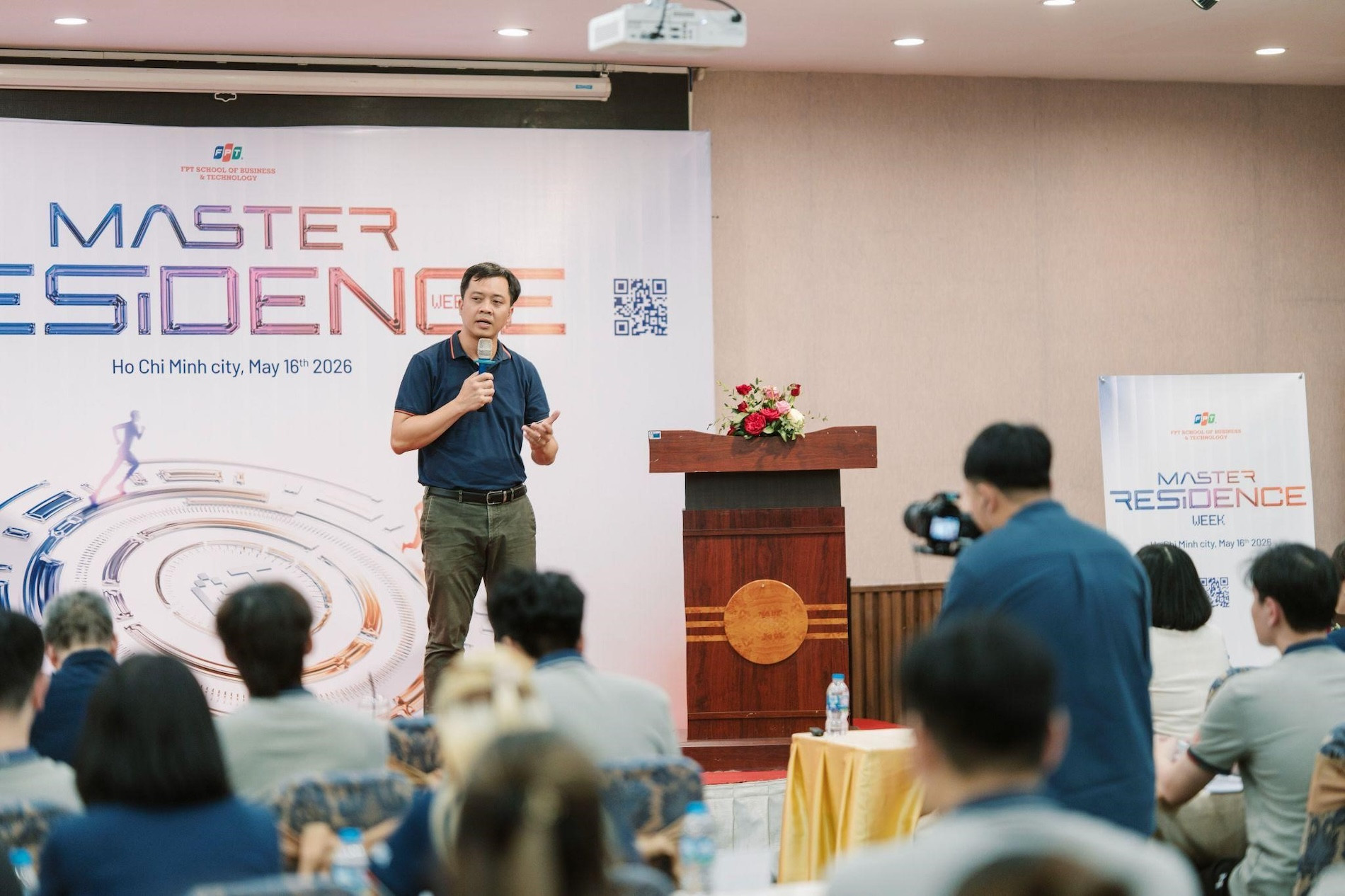
Dr. Doan Xuan Huy Minh works with students in class.
The core value of an engineer in the AI-First era is no longer measured by coding speed, but by the ability to identify the right problem and take full responsibility for the solution they create. Dr. Doan Xuan Huy Minh emphasizes that before starting any task or project, IT engineers should first study and deeply understand the problems facing the business and its customers.
A real-world problem always consists of multiple interconnected layers:
Organizational goals → Business processes → Available data → Costs & Risks → Success criteria
Only after analyzing these layers does the choice of an AI tool or model truly become meaningful.
From the “Cold Shower” of ChatGPT to Rebuilding His “Operating System”
Mr Nguyen Viet Chung, CEO of VietPlatform and an alumnus of the Master of Software Engineering (MSE AI) program at FSB, says the emergence of ChatGPT in late 2022 prompted him to rethink his entire approach to software development after more than 15 years in the industry.
At the time, he was already serving as CTO and had extensive experience building technology systems. However, the rapid advancement of AI made him realize that technical expertise alone was no longer enough.

Nguyen Viet Chung, CEO of VietPlatform and MSE Alumni
The explosion of ChatGPT in late 2022 came as a “cold shower,” challenging his previous confidence. At FSB, his first major shift in perspective completely changed the way he approached technology and helped him move beyond the trap of being a purely technical professional.
“I used to be a typical technical person. Whenever I received a requirement, I would immediately focus on finding the fastest way to build it. During a project proposal defense, my lecturer simply asked: ‘Who are you solving this problem for? If this solution didn’t exist, what would they lose?’ That question made me realize that I had always been good at the ‘how’, but had not spent enough time understanding the ‘why’.”
After that experience, Chung completely changed his product development process. Instead of starting with technology, his team now identifies three layers before writing a single line of code: Why, What, and only then How.
The Power of “Big Friends”: A Peer Network Creating Value for the Community
The value of FSB extends beyond knowledge delivered in the classroom. Its learning environment has created a unique ecosystem connecting “Big Friends” – a community of people united by shared aspirations.
It was during conversations in the hallway after class, sparked by concerns over old, faded and damaged portraits of fallen soldiers, that Chung and his classmates laid the first foundations for the “Mien Ky Uc” (Realm of Memories) project.
A passionate, hands-on team emerged directly from the classroom, brought together by strong professional expertise and a shared commitment to serving the community.
The team faced two major technical challenges. First, AI models were prone to “hallucinations,” potentially distorting the facial features of Vietnamese people. Second, historical references for military uniforms and insignia from different periods were extremely limited.
The team therefore collected historical materials themselves, built their own dataset, and established a process in which every restored image was manually reviewed based on one principle: Restore, don’t create.
“Mien Ky Uc”: When AI-Created Value Touches the Human Heart
The true value of “Mien Ky Uc” goes beyond technical drawings or lines of code. It emerged when technology reached one of the deepest dimensions of human emotion.
To date, more than 200 precious portraits of fallen soldiers and damaged historical photographs have been fully restored, bringing back their original facial features and expressions.
Yet what the team values most is not the numbers, but the moments when technology provides priceless comfort to those left behind.
Chung recalls presenting a restored portrait to an elderly woman in Nghe An whose son had died in his early twenties. After decades of seeing only a faded image, she held the newly restored portrait in her hands, remained silent for a long time, and quietly said:
“After all these decades, I can finally see my son’s face clearly again.”
For the team, that moment made every sleepless night worthwhile.
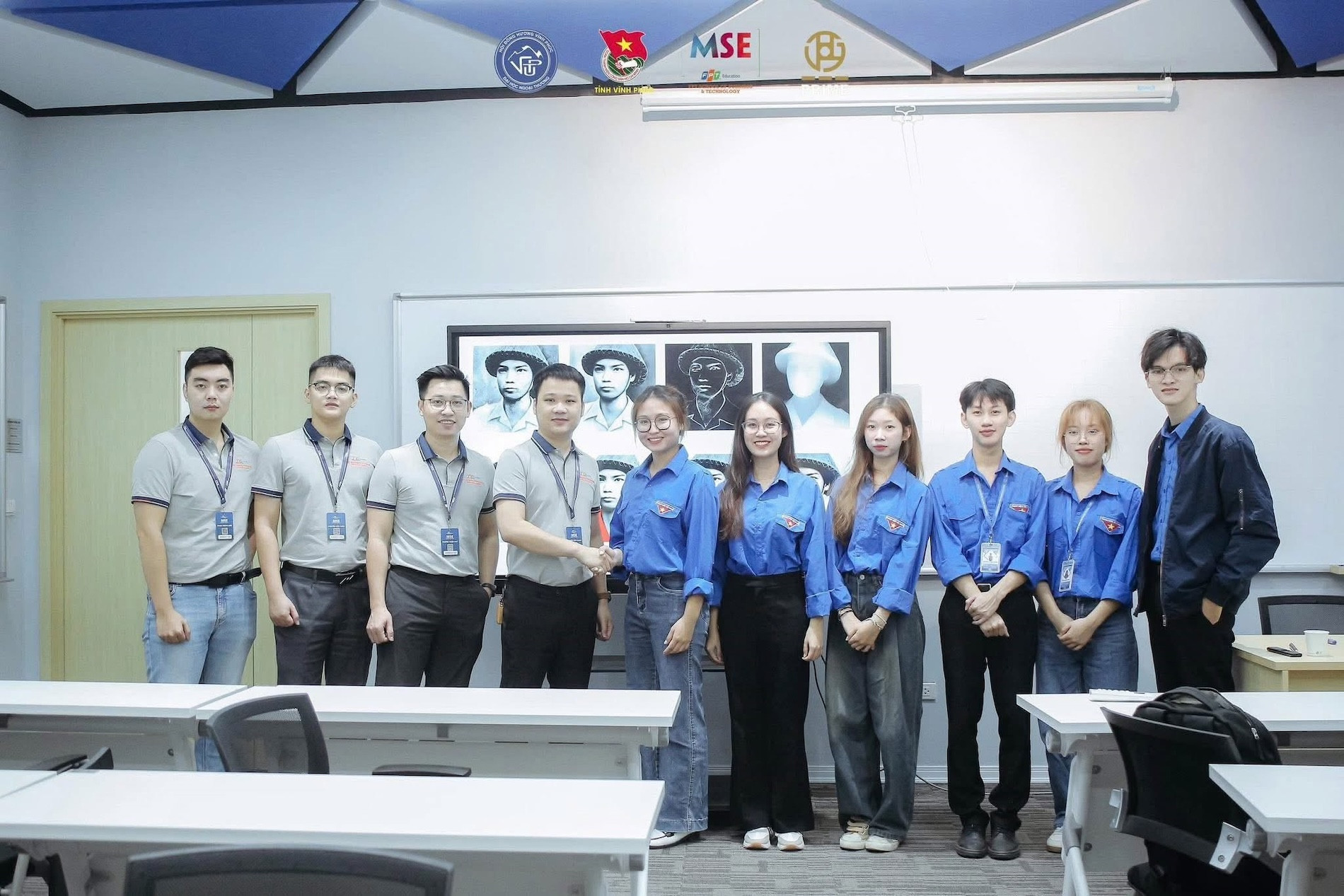
Nguyen Viet Chung and MSE students working on the project
Importantly, the team’s journey was never a solo effort. FSB’s alumni network became a strong support system, helping the project reach a wider audience.
This sustained connection reflects one of FSB’s distinctive values: learning does not end at graduation. Instead, it opens the door to a connected community that continues working together to create meaningful value for society.
“Looking back, my decision to return to school, initially driven by the fear of being replaced by AI, turned out to be the right investment in my career. I’m no longer afraid of AI replacing me, because I’ve chosen to stand on the side of people who use AI to create value,” Nguyen Viet Chung shared.
From a Community Project to an AI-First Mindset for Startups
The architectural thinking Chung developed at FSB did not stop with a community project. It became a “roadmap” that gave him the confidence to apply the same approach to real-world business projects.
Recognizing the high cost of GPU infrastructure – a challenge the team had encountered while developing “Mien Ky Uc”—Chung and his VietPlatform team developed AIDev, a project providing optimized GPU Cloud infrastructure for Vietnamese engineers.
MSE AI: Learning to Adapt to the AI-First Era
According to Dr. Doan Xuan Huy Minh, AI will continue to reshape how the technology industry operates, while also creating new opportunities for engineers who can combine technical expertise with management thinking.
“In the future, businesses will not only look for people who can write code. They will need professionals who can connect technology with business strategy, data, and customer experience.”
This is also why many experienced engineers choose to return to education after several years in the workforce—to strengthen their capabilities in system architecture, AI project management, and practical problem-solving.
According to FPT School of Business & Technology (FSB) – FPT University, the Master of Software Engineering (MSE AI) program is designed for experienced technology professionals, with a focus on three core capabilities: system architecture thinking, AI project management, and the ability to connect with expert and business communities.
The goal is not simply to keep up with emerging technologies, but to strengthen learners’ decision-making capabilities and ability to create value in an AI-First environment.
Learn more about the MSE AI program: MSE AI – FSB