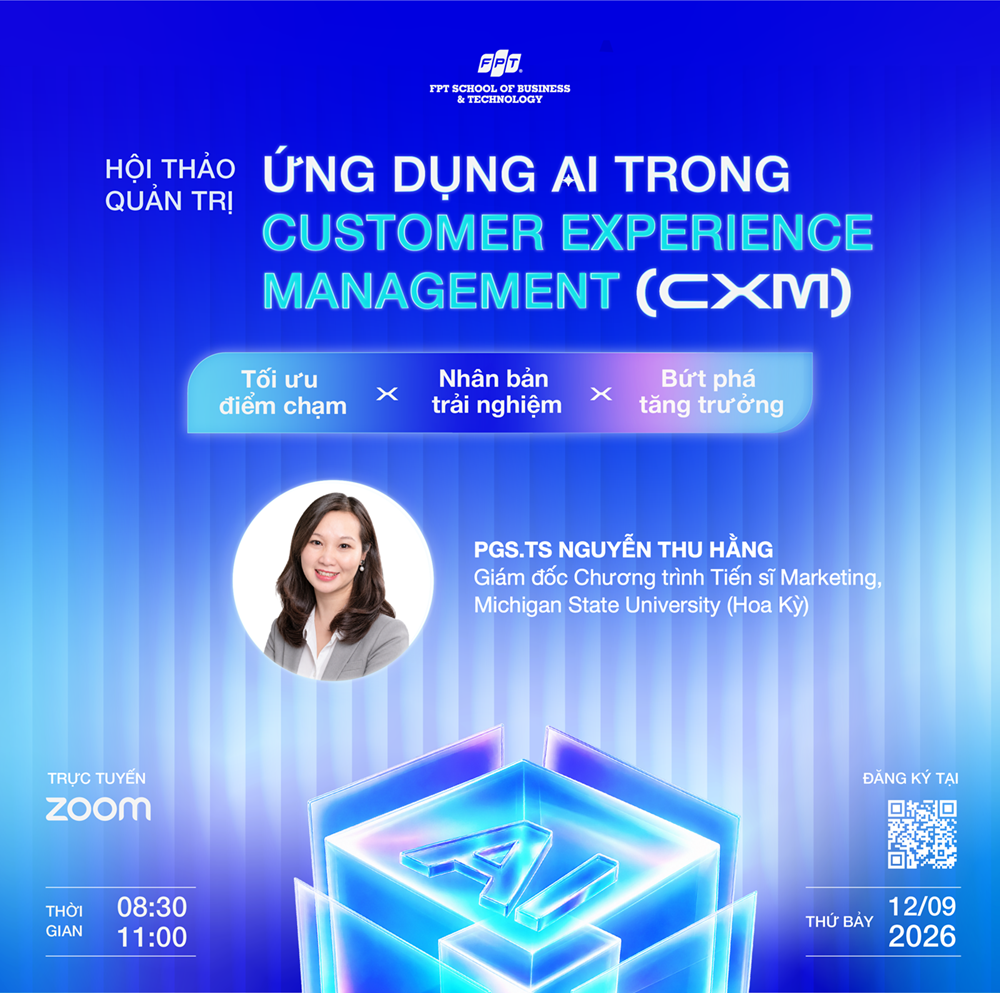
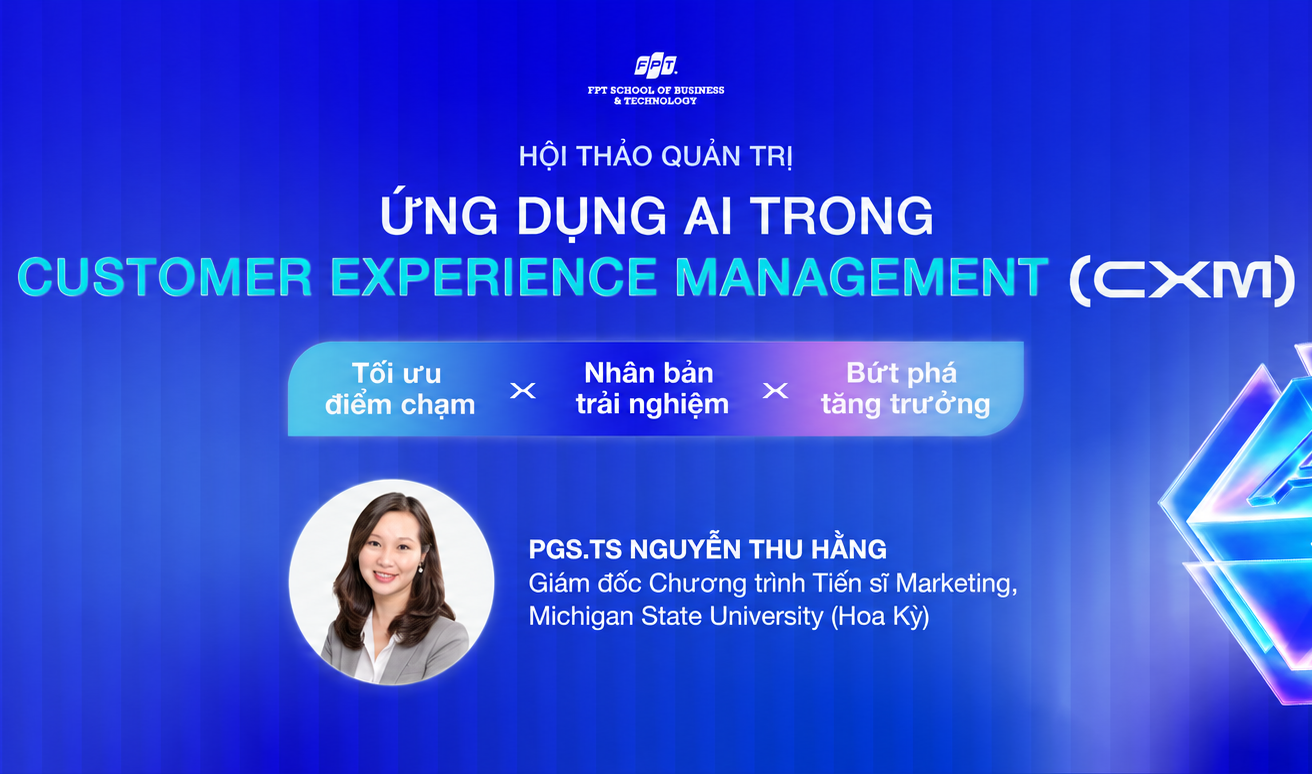
Hội thảo Quản trị: Ứng dụng AI trong Customer Experience Management (CXM)

AI đang nhanh chóng vượt ra khỏi vai trò của một công cụ tối ưu hóa vận hành để trở thành đòn bẩy chiến lược giúp doanh nghiệp hiểu khách hàng sâu hơn, cá nhân hóa trải nghiệm ở quy mô lớn và nâng cao chất lượng tương tác.

Nhưng AI càng thông minh, trải nghiệm khách hàng có thực sự tốt hơn? Làm thế nào để AI không biến Customer Experience thành những tương tác tự động, thiếu cảm xúc? Và doanh nghiệp cần thay đổi tư duy, cách vận hành ra sao để thực sự lấy khách hàng làm trọng tâm?

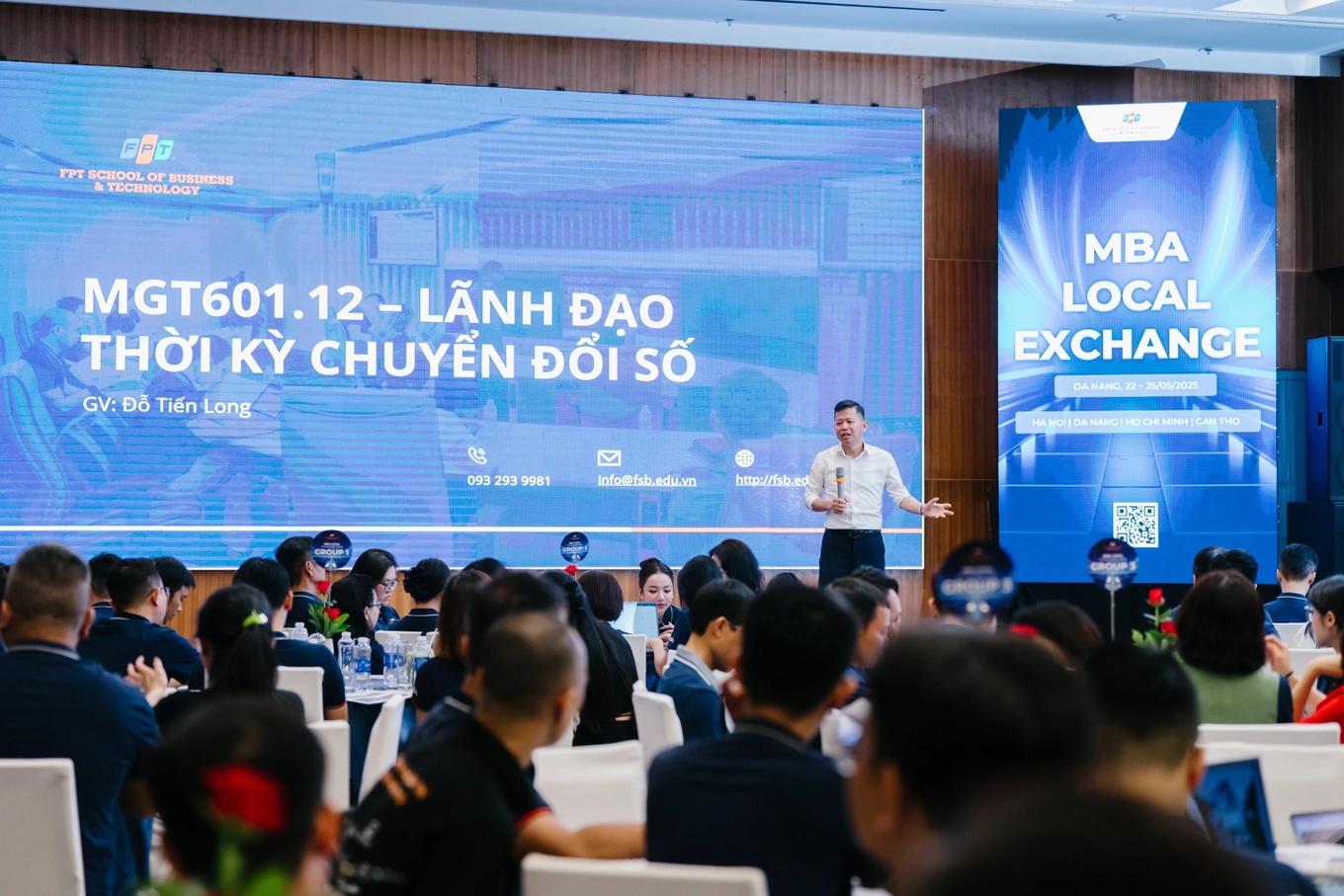
Những câu hỏi đó sẽ được cùng cộng đồng Alumni FSB và các nhà quản lý khám phá tại Alumni Workshop #16 – không gian cập nhật tri thức, chia sẻ góc nhìn và kết nối dành riêng cho cộng đồng FSB.

Tâm điểm của chương trình là PGS.TS Nguyễn Thu Hằng – Giám đốc Chương trình Tiến sĩ Marketing, Michigan State University (MSU – Hoa Kỳ). Với góc nhìn học thuật và kinh nghiệm quốc tế, cô sẽ dẫn dắt phiên Keynote, mở ra bức tranh tổng quan về AI và tương lai của Customer Experience Management.

Tiếp nối Keynote là 3 Breakout Sessions chuyên sâu, nơi các bài toán thực chiến về AI và CXM được đào sâu và giải quyết dưới nhiều góc nhìn, cùng các Speaker giàu kinh nghiệm.

Thông tin sự kiện:

Thời gian: 08:30 – 11:00 | Thứ Bảy, 12/09/2026

Hình thức: Online qua Zoom – Keynote & 3 Breakout Sessions

Đối tượng: Học viên, Cựu học viên FSB và các nhà quản lý

Hạn đăng ký: 17:00 | ngày 09/09/2026

Đăng ký giữ chỗ: https://forms.gle/QBjpkM3nRFjwkSQs6

Thông tin liên hệ BTC: Ms. Lê Thanh – Email: thanhlt78@fe.edu.vn 

Hẹn gặp các học viên, cựu học viên FSB tại một buổi sáng cùng AI, CX và những góc nhìn quản trị mới!

Tin FSB

From “Guidance” to Breakthrough: How Young Engineers Can Thrive in the AI-First Era

The rapid rise of AI has left many IT engineers concerned about being replaced by algorithms. Yet, from a more positive perspective, this transformation presents a major opportunity for those who know how to learn effectively and have the right mentors—people with both vision and a strong sense of purpose.

The Biggest Gap Is Not Technology, but Guidance

According to PwC’s 2025 Global Workforce Survey, as many as 83% of workers in Vietnam use AI in their jobs. Notably, 38% use generative AI on a daily basis—more than twice the global average of 14%.

In the era of Generative AI, just a few prompts can produce highly accurate results within seconds. The ability to “write code,” once considered the key advantage protecting traditional software engineers, is now increasingly vulnerable as AI becomes more capable of reasoning and solving complex problems.

Yet the biggest gap facing IT professionals today is not a lack of tools or failure to keep up with new technologies. It is the absence of a strategic “operating system” for thinking—and experienced mentors who can help them identify the right problems and turn technology into tangible value for businesses and society.

When “Master Mentors” Guide the Next Generation

After working with generations of Master of Software Engineering (MSE) students, Dr. Doanh Xuan Huy Minh, Lecturer at FPT School of Business & Technology (FSB) – FPT University, believes that the biggest challenge facing today’s technology professionals is not the tools themselves, but the confusion between “using AI” and “having the ability to create value.”

Dr. Doan Xuan Huy Minh works with students in class.

The core value of an engineer in the AI-First era is no longer measured by coding speed, but by the ability to identify the right problem and take full responsibility for the solution they create. Dr. Doan Xuan Huy Minh emphasizes that before starting any task or project, IT engineers should first study and deeply understand the problems facing the business and its customers.

A real-world problem always consists of multiple interconnected layers:

Organizational goals → Business processes → Available data → Costs & Risks → Success criteria

Only after analyzing these layers does the choice of an AI tool or model truly become meaningful.

From the “Cold Shower” of ChatGPT to Rebuilding His “Operating System”

Mr Nguyen Viet Chung, CEO of VietPlatform and an alumnus of the Master of Software Engineering (MSE AI) program at FSB, says the emergence of ChatGPT in late 2022 prompted him to rethink his entire approach to software development after more than 15 years in the industry.

At the time, he was already serving as CTO and had extensive experience building technology systems. However, the rapid advancement of AI made him realize that technical expertise alone was no longer enough.

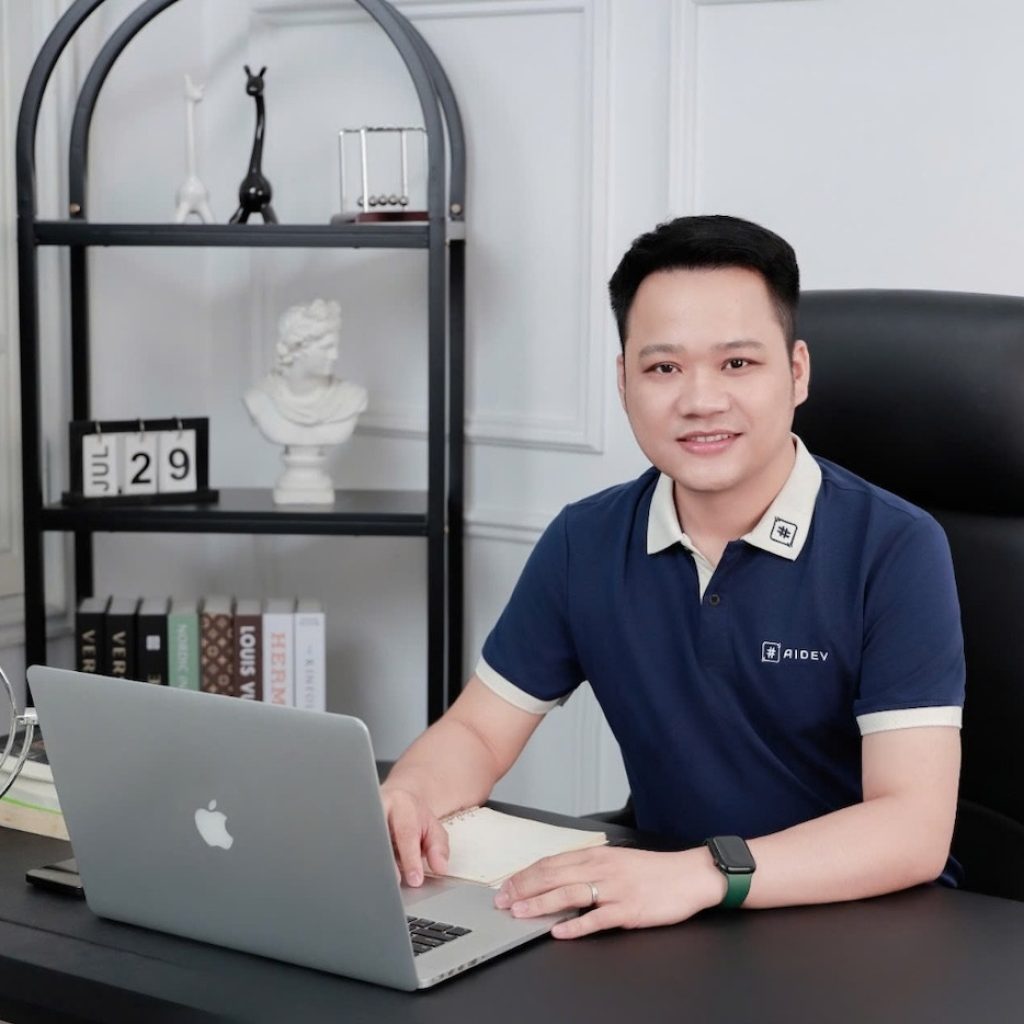
Nguyen Viet Chung, CEO of VietPlatform and MSE Alumni

The explosion of ChatGPT in late 2022 came as a “cold shower,” challenging his previous confidence. At FSB, his first major shift in perspective completely changed the way he approached technology and helped him move beyond the trap of being a purely technical professional.

“I used to be a typical technical person. Whenever I received a requirement, I would immediately focus on finding the fastest way to build it. During a project proposal defense, my lecturer simply asked: ‘Who are you solving this problem for? If this solution didn’t exist, what would they lose?’ That question made me realize that I had always been good at the ‘how’, but had not spent enough time understanding the ‘why’.”

After that experience, Chung completely changed his product development process. Instead of starting with technology, his team now identifies three layers before writing a single line of code: Why, What, and only then How.

The Power of “Big Friends”: A Peer Network Creating Value for the Community

The value of FSB extends beyond knowledge delivered in the classroom. Its learning environment has created a unique ecosystem connecting “Big Friends” – a community of people united by shared aspirations.

It was during conversations in the hallway after class, sparked by concerns over old, faded and damaged portraits of fallen soldiers, that Chung and his classmates laid the first foundations for the “Mien Ky Uc” (Realm of Memories) project.

A passionate, hands-on team emerged directly from the classroom, brought together by strong professional expertise and a shared commitment to serving the community.

The team faced two major technical challenges. First, AI models were prone to “hallucinations,” potentially distorting the facial features of Vietnamese people. Second, historical references for military uniforms and insignia from different periods were extremely limited.

The team therefore collected historical materials themselves, built their own dataset, and established a process in which every restored image was manually reviewed based on one principle: Restore, don’t create.

“Mien Ky Uc”: When AI-Created Value Touches the Human Heart

The true value of “Mien Ky Uc” goes beyond technical drawings or lines of code. It emerged when technology reached one of the deepest dimensions of human emotion.

To date, more than 200 precious portraits of fallen soldiers and damaged historical photographs have been fully restored, bringing back their original facial features and expressions.

Yet what the team values most is not the numbers, but the moments when technology provides priceless comfort to those left behind.

Chung recalls presenting a restored portrait to an elderly woman in Nghe An whose son had died in his early twenties. After decades of seeing only a faded image, she held the newly restored portrait in her hands, remained silent for a long time, and quietly said:

“After all these decades, I can finally see my son’s face clearly again.”

For the team, that moment made every sleepless night worthwhile.

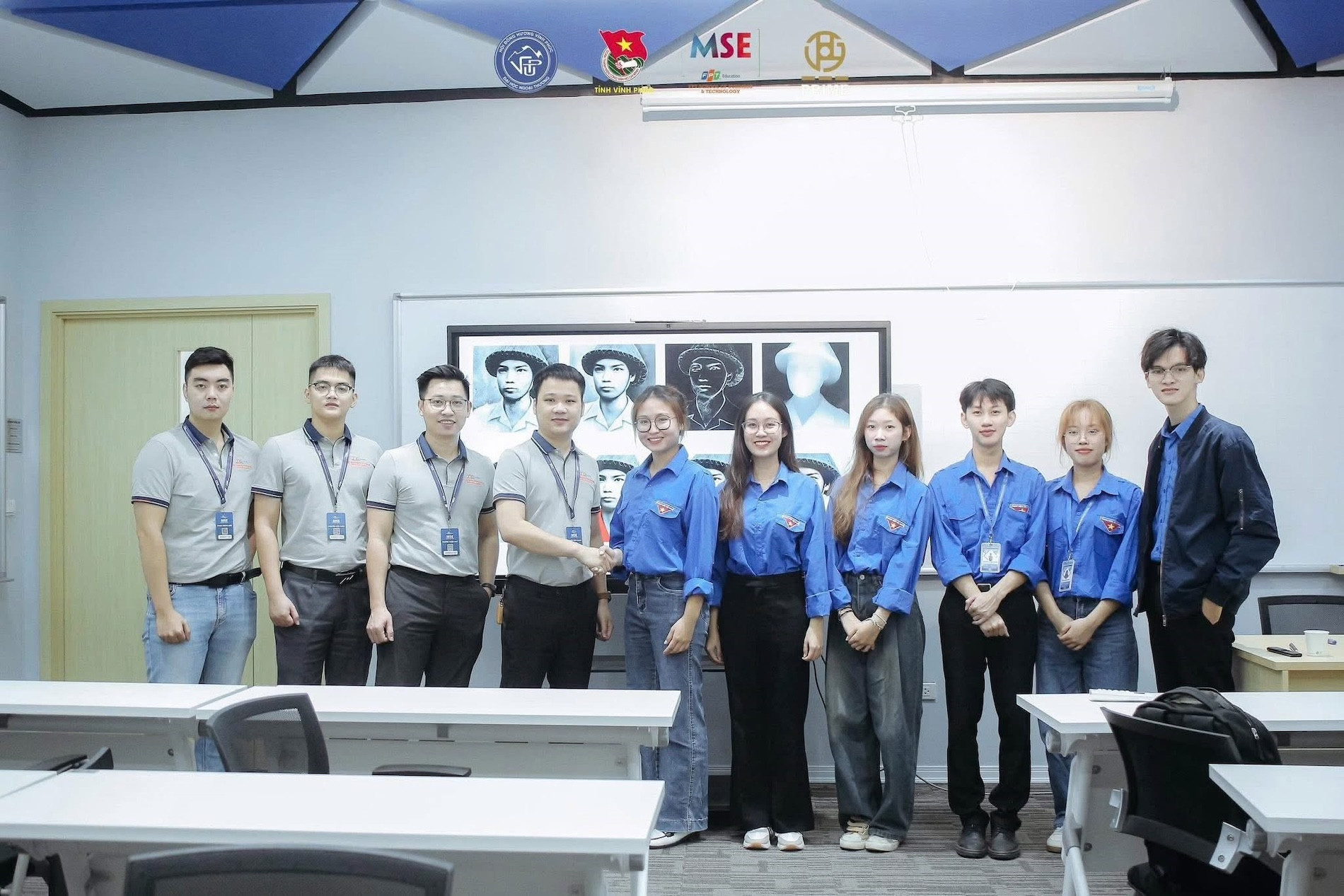
Nguyen Viet Chung and MSE students working on the project

Importantly, the team’s journey was never a solo effort. FSB’s alumni network became a strong support system, helping the project reach a wider audience.

This sustained connection reflects one of FSB’s distinctive values: learning does not end at graduation. Instead, it opens the door to a connected community that continues working together to create meaningful value for society.

“Looking back, my decision to return to school, initially driven by the fear of being replaced by AI, turned out to be the right investment in my career. I’m no longer afraid of AI replacing me, because I’ve chosen to stand on the side of people who use AI to create value,” Nguyen Viet Chung shared.

From a Community Project to an AI-First Mindset for Startups

The architectural thinking Chung developed at FSB did not stop with a community project. It became a “roadmap” that gave him the confidence to apply the same approach to real-world business projects.

Recognizing the high cost of GPU infrastructure – a challenge the team had encountered while developing “Mien Ky Uc”—Chung and his VietPlatform team developed AIDev, a project providing optimized GPU Cloud infrastructure for Vietnamese engineers.

MSE AI: Learning to Adapt to the AI-First Era

According to Dr. Doan Xuan Huy Minh, AI will continue to reshape how the technology industry operates, while also creating new opportunities for engineers who can combine technical expertise with management thinking.

“In the future, businesses will not only look for people who can write code. They will need professionals who can connect technology with business strategy, data, and customer experience.”

This is also why many experienced engineers choose to return to education after several years in the workforce—to strengthen their capabilities in system architecture, AI project management, and practical problem-solving.

According to FPT School of Business & Technology (FSB) – FPT University, the Master of Software Engineering (MSE AI) program is designed for experienced technology professionals, with a focus on three core capabilities: system architecture thinking, AI project management, and the ability to connect with expert and business communities.

The goal is not simply to keep up with emerging technologies, but to strengthen learners’ decision-making capabilities and ability to create value in an AI-First environment.

Learn more about the MSE AI program: MSE AI – FSB
Từ nền tảng ‘Người dẫn đường’ đến sự bứt phá của kỹ sư trẻ thời AI-First

Làn sóng AI bùng nổ khiến nhiều kỹ sư IT lo lắng bị thay thế bởi các thuật toán. Tuy nhiên, nhìn ở góc độ tích cực, đây lại là cơ hội bứt phá cho những ai biết học đúng cách và có người dẫn đường đủ Tâm – Tầm.

Khoảng cách lớn nhất không phải là công nghệ, mà là người dẫn đường

Theo khảo sát của PwC về lực lượng lao động toàn cầu năm 2025, có tới 83% người lao động tại Việt Nam sử dụng AI trong công việc. Đáng chú ý, 38% người lao động sử dụng AI tạo sinh hàng ngày, gấp hơn hai lần mức trung bình toàn cầu (14%).

Trong kỷ nguyên Generative AI, chỉ với một vài câu lệnh (prompt), các mô hình trí tuệ nhân tạo đã có thể trả ra kết quả chuẩn xác trong vài chục giây. Khả năng “gõ code” vốn được coi là thành lũy bảo vệ vị thế của các kỹ sư lập trình truyền thống, giờ đây đang đứng trước nguy cơ bị thay thế khi AI phát triển ngày càng mạnh về khả năng suy luận.

Thế nhưng, khoảng cách lớn nhất của một nhân sự IT hôm nay không nằm ở việc thiếu công cụ hay chưa cập nhật công nghệ mới, mà nằm ở sự thiếu vắng của một hệ điều hành tư duy chiến lược và những người dẫn đường giàu trải nghiệm, giúp họ nhận diện bài toán đúng và biến công nghệ thuần túy thành giá trị thực tiễn cho doanh nghiệp và xã hội.

Khi “Thầy lớn” định hướng thế hệ trẻ

Tiếp xúc với nhiều thế hệ học viên Thạc sĩ Kỹ thuật phần mềm MSE, TS. Đoàn Xuân Huy Minh (Giảng viên Viện Quản trị và Công nghệ FSB, Trường Đại học FPT) nhận định vấn đề lớn nhất của dân công nghệ hiện nay không nằm ở công cụ, mà nằm ở sự nhầm lẫn giữa việc “sử dụng AI” với “năng lực tạo ra giá trị”.

TS Đoàn Xuân Huy Minh đồng hành cùng các học viên tại các lớp học.

Giá trị cốt lõi của người kỹ sư thời AI-First giờ đây không còn được đo bằng tốc độ gõ code, mà nằm ở năng lực xác định đúng bài toán và chịu trách nhiệm đến cùng cho giải pháp mà mình tạo ra. TS. Đoàn Xuân Huy Minh cho rằng trước khi bắt đầu thực hiện một công việc hay dự án nào đó, các kỹ sư IT nên nghiên cứu và hiểu sâu về vấn đề doanh nghiệp, khách hàng đang cần.

Một bài toán thực tế luôn có nhiều lớp liên kết chặt chẽ: Mục tiêu tổ chức → Quy trình nghiệp vụ → Dữ liệu hiện có → Chi phí & Rủi ro → Tiêu chí thành công. Khi phân tích đầy đủ các lớp này, việc lựa chọn công cụ hay mô hình AI mới thực sự có ý nghĩa.

Từ “gáo nước lạnh” ChatGPT đến quyết định làm mới “hệ điều hành”

Anh Nguyễn Việt Chung – CEO VietPlatform, cựu học viên chương trình Thạc sĩ Kỹ thuật Phần mềm (MSE AI) tại FSB – cho biết sự xuất hiện của ChatGPT cuối năm 2022 đã khiến anh nhìn lại toàn bộ cách làm nghề sau hơn 15 năm phát triển phần mềm.

Ở thời điểm đó, anh đã đảm nhiệm vai trò CTO và có nhiều năm kinh nghiệm xây dựng hệ thống công nghệ. Tuy nhiên, chính sự phát triển quá nhanh của AI khiến anh nhận ra kiến thức kỹ thuật thôi là chưa đủ.

Anh Nguyễn Việt Chung – CEO VietPlatform, cựu học viên MSE FSB. Ảnh: NVCC.

Sự bùng nổ của ChatGPT vào cuối năm 2022 đã giội một “gáo nước lạnh” vào sự chủ quan trước nay của anh. Tại FSB, cú va chạm tư duy đầu tiên đã thay đổi hoàn toàn cách làm công nghệ của anh Chung, giúp anh bước ra khỏi cái bẫy của một người làm kỹ thuật thuần túy.

“Trước đây mình là dân kỹ thuật điển hình, nhận yêu cầu là lao vào tìm cách làm nhanh nhất. Trong một buổi bảo vệ đề cương, thầy chỉ hỏi: “Em đang giải quyết bài toán cho ai? Nếu không có giải pháp này thì họ mất điều gì?” Câu hỏi đó khiến mình nhận ra bấy lâu nay mình giỏi phần “làm”, nhưng chưa dành đủ thời gian để hiểu “vì sao phải làm”.

Sau trải nghiệm đó, anh thay đổi hoàn toàn quy trình phát triển sản phẩm. Thay vì bắt đầu bằng công nghệ, đội ngũ của anh luôn xác định rõ ba tầng trước khi chạm vào code: Why, What, rồi mới đến How.

Sức mạnh “Bạn lớn”: Mạng lưới đồng học kiến tạo giá trị cho cộng đồng

Không chỉ dừng lại ở tri thức trên bục giảng, môi trường FSB tạo nên một hệ sinh thái kết nối đặc biệt giữa những “Bạn lớn” – nơi hội tụ của những tâm hồn cùng chung khát vọng. Chính tại góc hành lang sau giờ lên lớp, từ trăn trở trước những tấm di ảnh liệt sĩ bị mờ xước, ố hỏng theo thời gian, anh Chung cùng các bạn học đã đặt những viên gạch đầu tiên cho dự án “Miền ký ức”. Một đội ngũ thực chiến đầy nhiệt huyết được hình thành ngay tại lớp học, gắn kết chặt chẽ bởi năng lực chuyên môn vượt trội và chung một lý tưởng phụng sự cộng đồng.

Nhóm đối mặt với hai “điểm nghẽn” kỹ thuật cực lớn: Các mô hình AI dễ bị “ảo giác” làm sai lệch khuôn mặt người Việt; đồng thời tư liệu quân phục, quân hiệu qua các thời kỳ lịch sử gần như không có sẵn. Nhóm đã tự tay sưu tầm tư liệu, xây dựng bộ dữ liệu riêng và đặt quy trình để con người kiểm định từng tấm theo nguyên tắc: Phục chế chứ không sáng tạo.

Dự án “Miền ký ức”: Khi AI tạo giá trị chạm đến trái tim

Không dừng lại ở bản vẽ kỹ thuật hay những dòng code khô khan, giá trị thực sự của “Miền ký ức” tỏa sáng khi công nghệ chạm tới những góc sâu thẳm nhất của cảm xúc con người. Đến nay, hơn 200 di ảnh quý của các liệt sĩ và các tấm ảnh tư liệu lịch sử ố hỏng đã được phục chế hoàn chỉnh, trả lại trọn vẹn đường nét thần thái vốn có.

Thế nhưng, điều khiến cả nhóm tâm đắc nhất không nằm ở những con số thống kê, mà ở khoảnh khắc công nghệ mang lại niềm an ủi vô giá cho những người ở lại. Anh Chung bùi ngùi nhớ lại lần trao di ảnh cho một cụ bà tại Nghệ An – người mẹ già có con trai hy sinh khi tuổi đời mới ngoài hai mươi. Cầm tấm di ảnh đã được khôi phục rõ nét sau nhiều thập kỷ chỉ còn là vệt bóng mờ, cụ im lặng rất lâu, rồi khẽ nói: “Mấy chục năm rồi mẹ mới lại nhìn rõ mặt con”. Giây phút ấy, những đêm thức trắng của cả nhóm đều trở nên giá trị.

Anh Nguyễn Việt Chung và các học viên MSE thực hiện dự án. Ảnh: NVCC.

Đáng chú ý, hành trình của nhóm không hề đơn độc. Mạng lưới cựu học viên (Alumni) FSB đã trở thành “hậu phương” vững chắc, tiếp thêm sức mạnh cho dự án lan tỏa xa hơn. Sự đồng hành bền chặt đó chính là giá trị khác biệt tại FSB: nơi việc học không dừng lại sau khi tốt nghiệp, mà mở ra một cộng đồng gắn kết, cùng chung tay tạo dựng những giá trị tử tế cho xã hội.

“Nhìn lại, quyết định đi học năm đó, xuất phát từ nỗi lo bị AI thay thế, hóa ra là khoản đầu tư đúng nhất trong sự nghiệp của mình. Giờ mình không còn sợ AI thay thế nữa, vì mình đã chọn đứng ở phía những người dùng AI để tạo ra giá trị.” Anh Nguyễn Việt Chung chia sẻ.

Từ dự án cộng đồng đến tư duy AI-First cho doanh nghiệp khởi nghiệp

Không chỉ dừng lại ở một dự án cộng đồng, tư duy kiến trúc tích lũy từ FSB đã trở thành “bản đồ chỉ đường” giúp anh Chung tự tin nhân rộng mô hình sang các dự án kinh doanh thực tế. Nhận thấy rào cản chi phí hạ tầng GPU đắt đỏ – bài toán mà chính nhóm từng gặp phải khi làm “Miền ký ức”, anh Chung cùng đội ngũ VietPlatform đã phát triển dự án AIDev, cung cấp hạ tầng GPU Cloud tối ưu cho kỹ sư Việt.

MSE AI – Học để thích nghi với thời đại AI-First

Theo TS. Đoàn Xuân Huy Minh, AI sẽ tiếp tục thay đổi cách vận hành của ngành công nghệ, nhưng cũng mở ra nhiều cơ hội cho những kỹ sư biết kết hợp giữa năng lực kỹ thuật và tư duy quản trị.

“Trong tương lai, doanh nghiệp sẽ không chỉ tìm kiếm những người biết viết code, mà cần những người có khả năng kết nối công nghệ với chiến lược kinh doanh, dữ liệu và trải nghiệm khách hàng.”

Đây cũng là lý do nhiều kỹ sư đã có kinh nghiệm lựa chọn quay lại học sau vài năm đi làm, nhằm bổ sung năng lực về kiến trúc hệ thống, quản trị dự án AI và tư duy giải quyết bài toán thực tiễn.

Theo đại diện Viện Quản trị và Công nghệ FSB, chương trình Thạc sĩ Kỹ thuật Phần mềm (MSE AI) được thiết kế cho nhóm nhân sự công nghệ đã có kinh nghiệm, tập trung vào ba năng lực chính: tư duy kiến trúc hệ thống, quản trị các dự án AI và khả năng kết nối với cộng đồng chuyên gia, doanh nghiệp. Mục tiêu không chỉ là cập nhật công nghệ mới mà còn giúp học viên nâng cao năng lực ra quyết định và tạo giá trị trong môi trường AI-First.

Tìm hiểu thêm thông tin về chương trình MSE AI tại https://caohoc.fpt.edu.vn/fsb/mse/

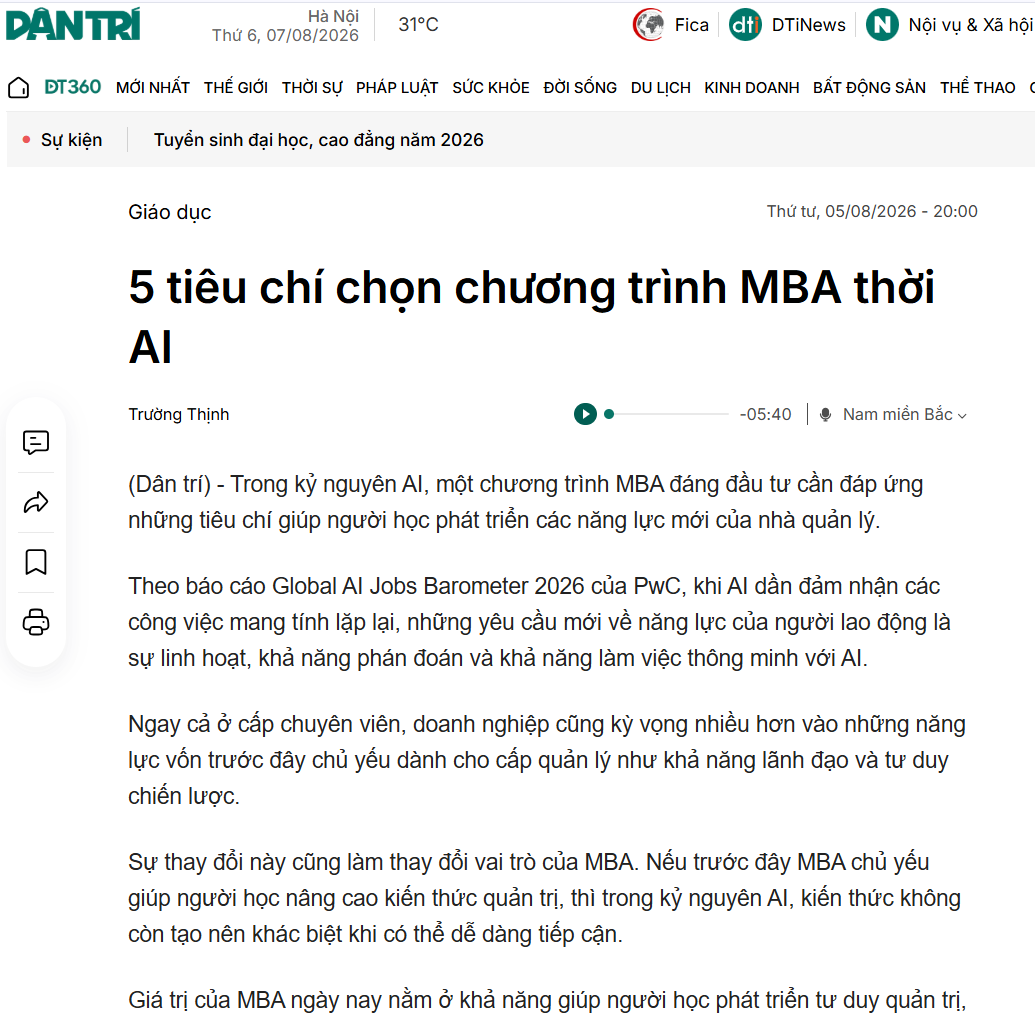
5 tiêu chí chọn chương trình MBA thời AI

Trong kỷ nguyên AI, một chương trình MBA đáng đầu tư cần đáp ứng những tiêu chí giúp người học phát triển các năng lực mới của nhà quản lý.

Theo báo cáo Global AI Jobs Barometer 2026 của PwC, khi AI dần đảm nhận các công việc mang tính lặp lại, những yêu cầu mới về năng lực của người lao động là sự linh hoạt, khả năng phán đoán và khả năng làm việc thông minh với AI.

Ngay cả ở cấp chuyên viên, doanh nghiệp cũng kỳ vọng nhiều hơn vào những năng lực vốn trước đây chủ yếu dành cho cấp quản lý như khả năng lãnh đạo và tư duy chiến lược.

>> Chi tiết: https://dantri.com.vn/giao-duc/5-tieu-chi-chon-chuong-trinh-mba-thoi-ai-20260805163934342.htm

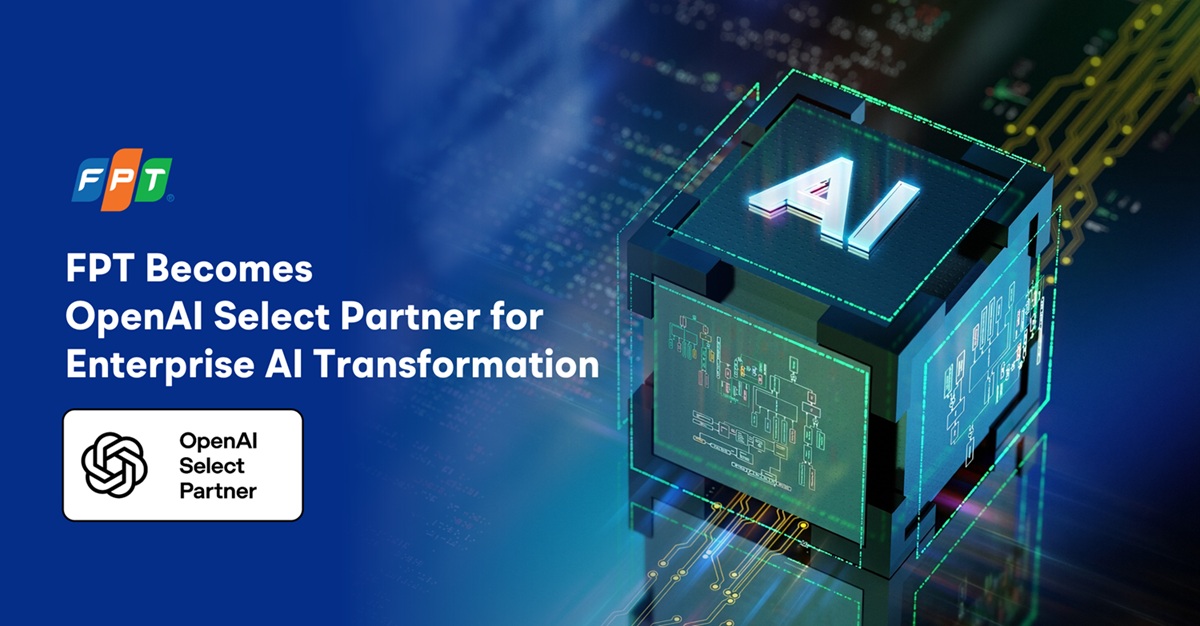
FPT Named an OpenAI Select Partner

HANOI, VIETNAM – August 6, 2026 — Global IT corporation FPT today announced that it has been named an OpenAI Select Partner within the OpenAI Partner Network.

The OpenAI Partner Network is a global program for partners to build, sell, and deliver AI solutions with OpenAI. It brings together partners with deep industry expertise, delivery capabilities, and customer relationships while equipping them with resources, enablement, and support to help enterprises adopt OpenAI frontier models and products and turn them into measurable impact.

As an OpenAI Select Partner, FPT will continue working with OpenAI to help organizations build, deploy, and scale AI solutions responsibly and effectively. This work will help organizations get more useful work from every token and stronger performance per dollar with GPT‑5.6, while using ChatGPT Work to turn ambitious goals into finished work. Combining AI-native engineering, enterprise integration expertise, and large-scale delivery capabilities, FPT brings frontier AI technologies into real-world operations with speed and control.

“As an OpenAI Select Partner, FPT will continue working with OpenAI to bring frontier models and products into enterprise operations at scale, helping organizations accelerate AI transformation responsibly and effectively,” said Pham Minh Tuan, FPT Software Chief Executive Officer and Executive Vice President, FPT Corporation.

“Cybersecurity is a critical area where frontier AI can create significant impact. By integrating GPT-5.6 Sol and Codex Security frontier intelligence into FPT’s cybersecurity platforms and intelligent workflows, especially our Patch the Enterprise program, we proactively protect our customers’ IT infrastructure and application environments as new AI-related risks emerge. This empowers organizations to identify, prioritize, and remediate vulnerabilities more efficiently while addressing emerging security risks with greater resilience and confidence,” he added.

Looking ahead, FPT plans to further integrate OpenAI technologies across its FleziPT ecosystem, develop new agentic AI solutions for enterprise workflows, expand AI infrastructure and enablement programs, and redesign operations around human–AI collaboration and AI-native ways of working, helping customers translate AI ambition into business outcomes.

FPT’s AI-first approach is guided by CASAN, an enterprise transformation framework designed to help organizations progress from fragmented experimentation to scalable, real-world AI deployment. Built around five levels of AI maturity—Curious, Augmented, Standard, Automatic, and Native—CASAN provides a structured roadmap to assess AI readiness, strengthen governance, and operationalize AI across core business functions. The framework is designed to address the challenges many enterprises face in effectively scaling AI by helping them assess their AI maturity, define the right adoption path, and transition from isolated initiatives to AI-native operations that deliver tangible value.

To support this vision, FPT has built an AI ecosystem comprising the AI platform, FleziPT, AI Factories in Vietnam and Japan, and a global workforce of more than 30,000 AI-augmented engineers, as well as strategic partnerships with leading AI players. Together, these capabilities enable FPT to deliver AI transformation at scale with tailored solutions that improve quality, speed, scalability, and traceability, delivering up to 60% shorter development time, more than 50% less rework, and a 30% uplift in developer productivity.

Learn more about the OpenAI Partner Network: https://openai.com/business/partners/

About FPT Corporation

FPT Corporation (FPT) is a globally leading Vietnam-headquartered technology and IT services provider, with operations spanning more than 30 countries and territories. Over more than three decades, FPT has consistently delivered impactful solutions to millions of individuals and tens of thousands of organizations worldwide. With a strong focus on mastering strategic technologies, FPT continues to drive innovation across industries. As an AI-first company, FPT is committed to elevating Vietnam’s position on the global tech map and delivering world-class AI-enabled solutions for global enterprises. In 2025, FPT reported a total revenue of USD 2.66 billion and a workforce of over 54,000 employees across its core businesses.

FPT News